Sep 5–Oct 18, 2026
Joseph Buckley
Chapeltown Road
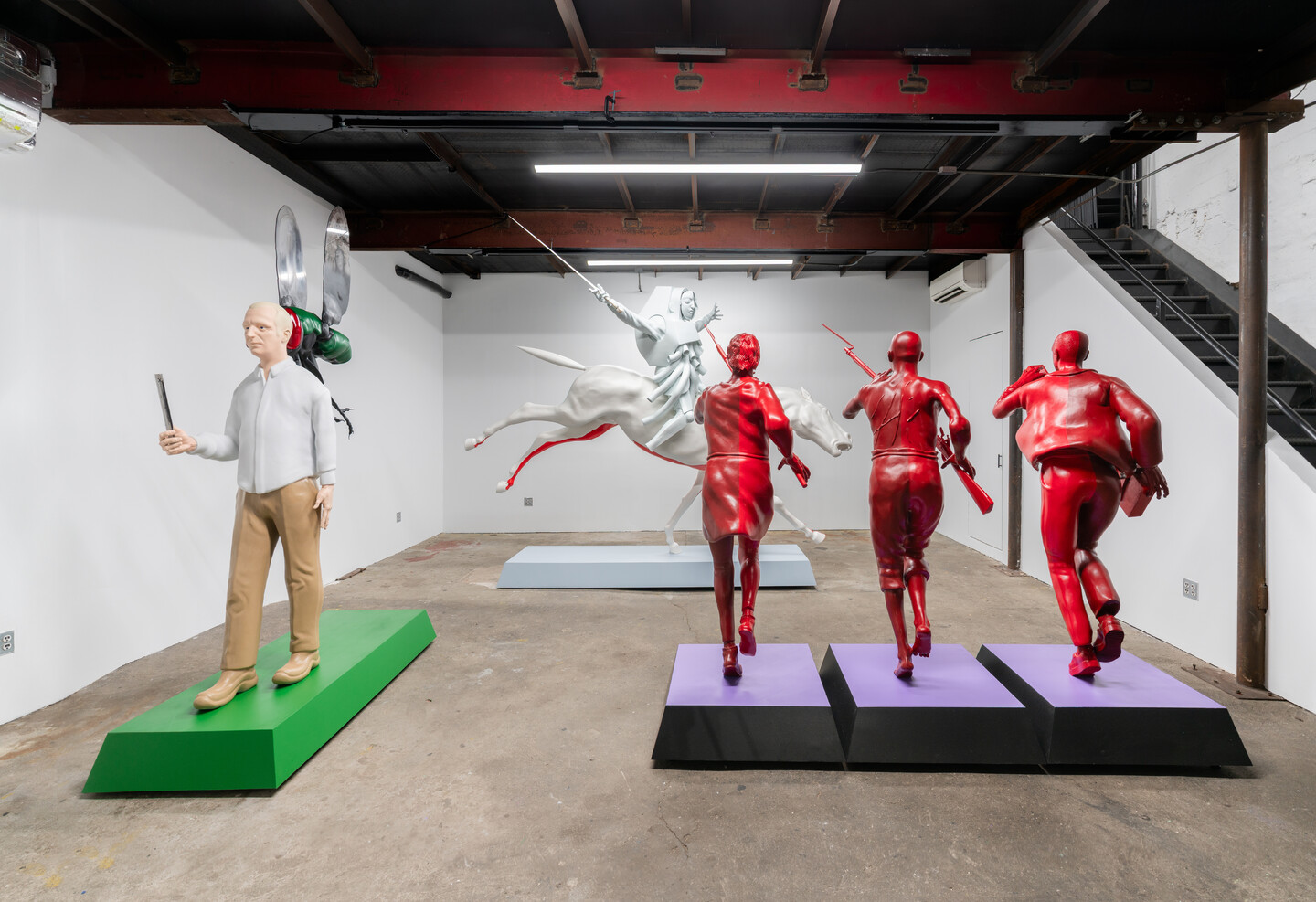
KAJE is pleased to present Chapeltown Road, a solo exhibition by British born, New York-based artist Joseph Buckley. The exhibition features four new sculptural works installed across KAJE’s bi-level exhibition space, on view September 5—October 18, 2025. Opening reception Saturday, September 5th, 6 to 9PM.
The exhibition borrows its title from the main road of the neighborhood the artist grew up in: Chapeltown, Leeds, England, extending from birthplace back through the histories of violence, dispossession, and neglect that have created and sustained England. The collection of works that comprise Chapeltown Road (Herald, George, Dragon, and Peasant), are manifestations of the ever-reproducing subjugation that is England, that both propels its nationalism and spawns its revolts. From imperial conquest through austerity, Buckley’s sculptures bring together a constellation of histories that reflect the long arc of English political power and national identity.
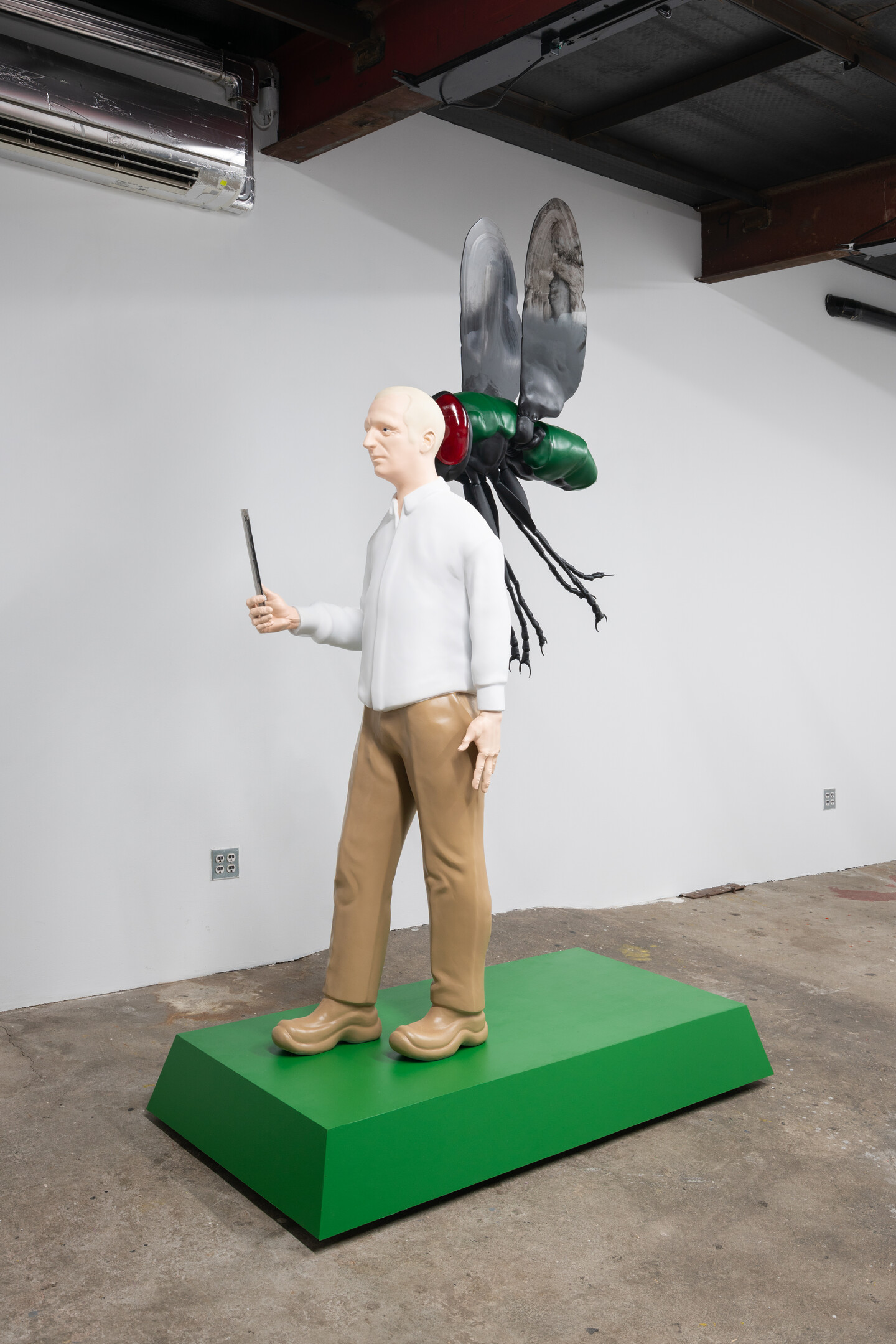
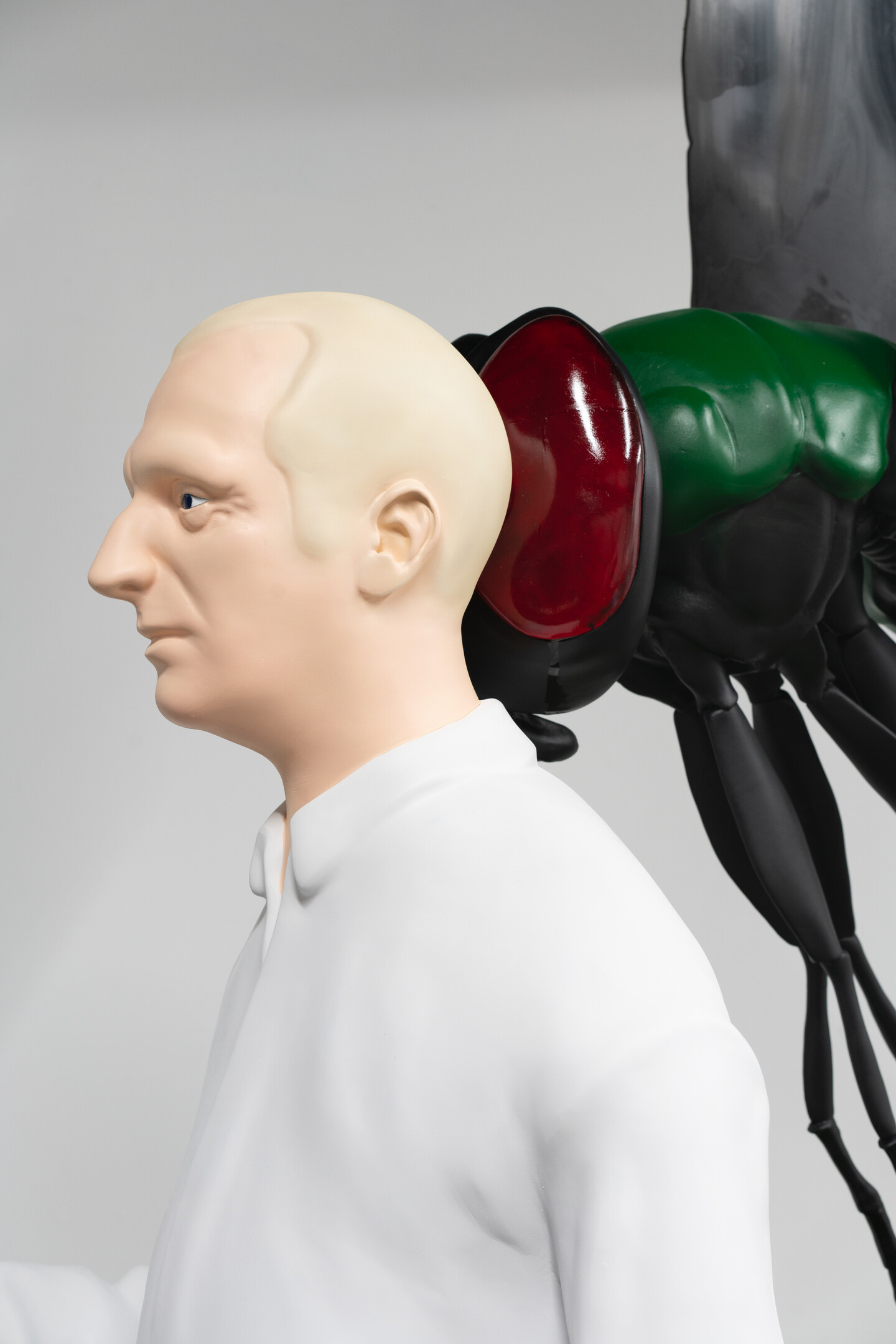
Herald is a sculpture of Sean Kaye, the artist’s “first real art professor.” Standing in a pose evocative of the ancient Egyptian sculptural genre of the striding figure, he holds a ruler in one hand, with a Lucilia Sericata fly emerging from the back of his head. Medieval thinkers believed that flies were spontaneously generated by rotting flesh. The figure, merged with vermin, appears as a kind of beckoning demiurge to both the exhibition and the alchemical life of artistic practice: “A trade between one’s time and effort and life, and the transmutation of a human body into a body of work.” The ruler is the same one that Buckley received upon entering the Leeds College of Art Foundation program.
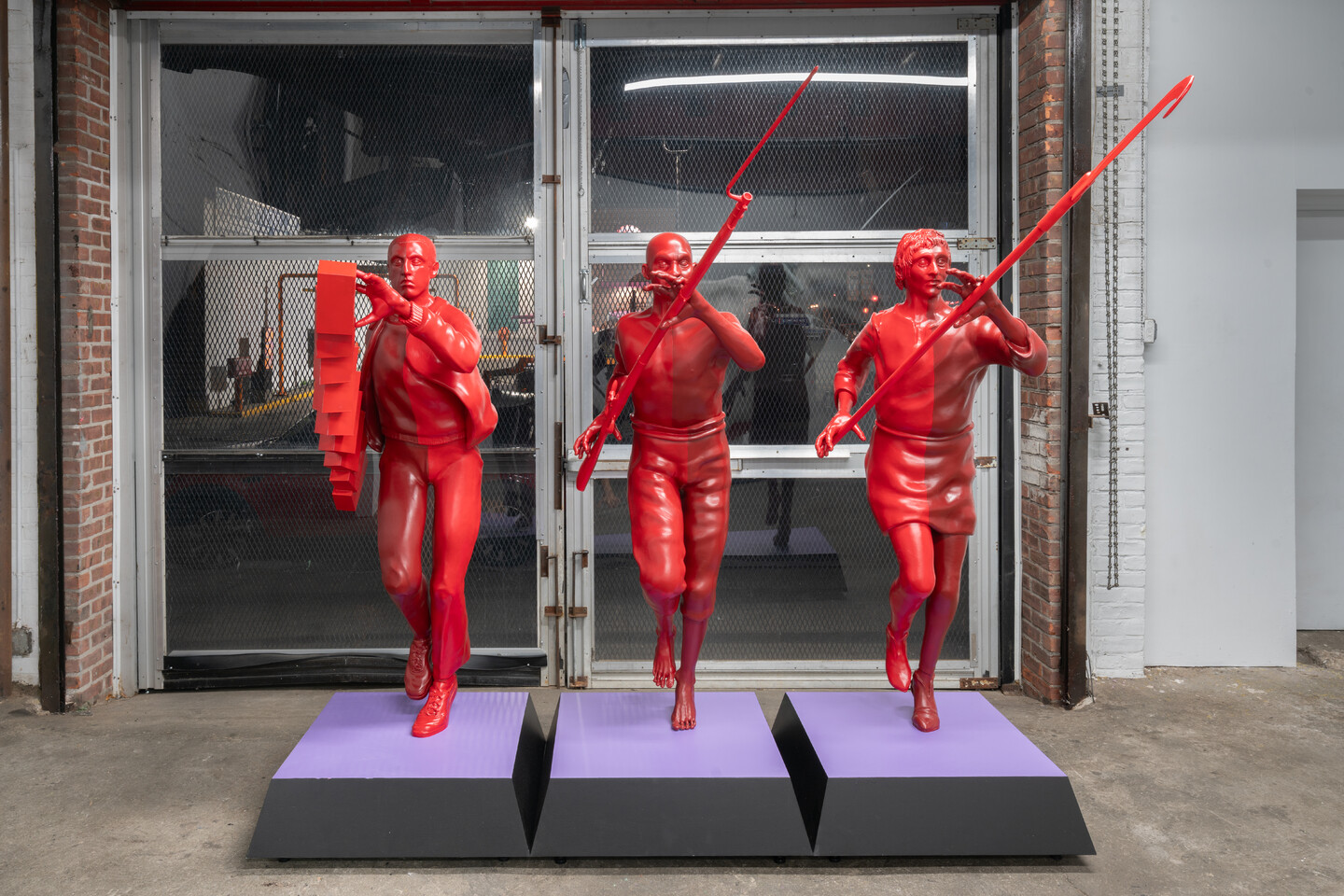
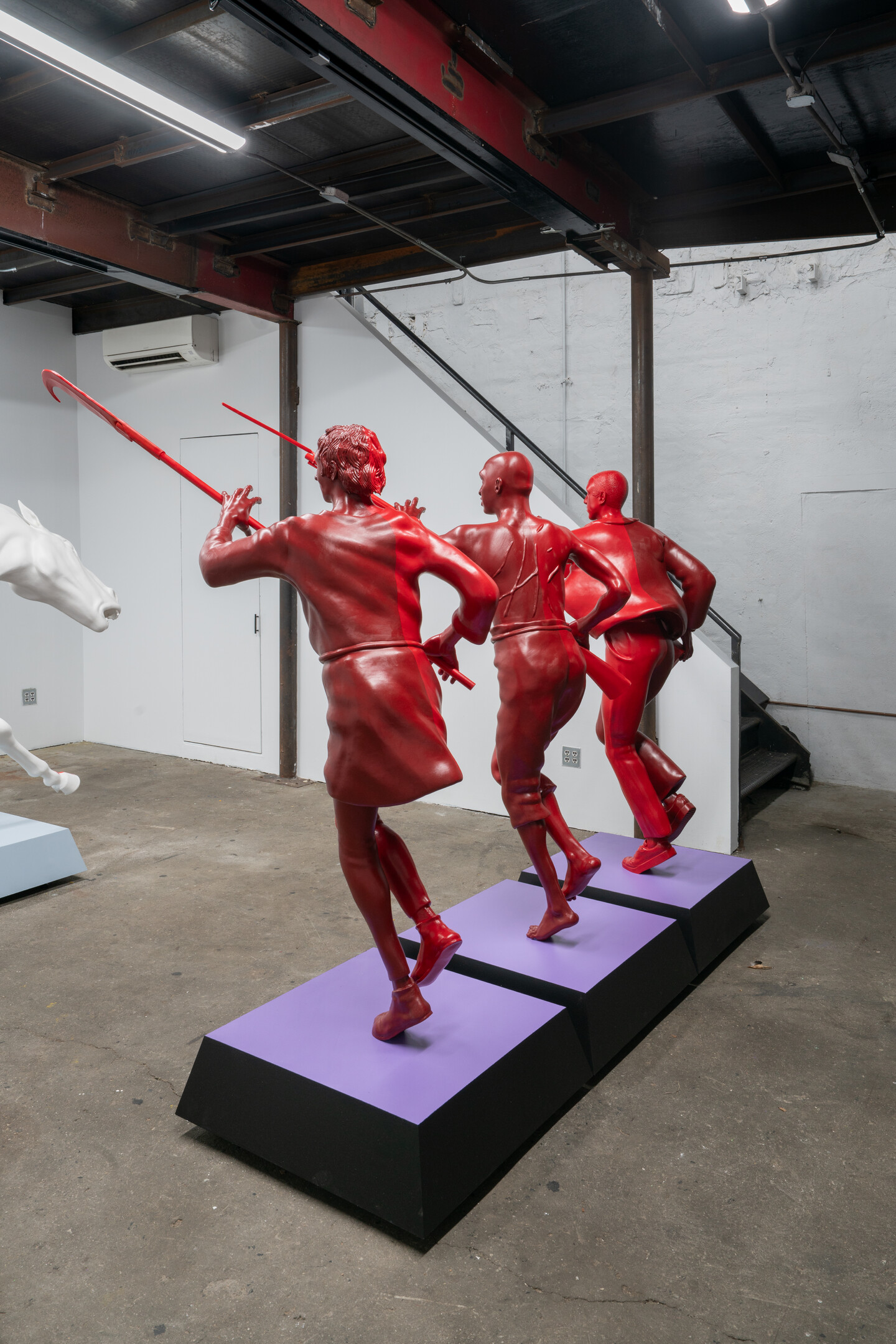
George is a sculpture of three figures, each representing a different historical inflection point while sharing a common figurative form: The Peasant, The Slave, and The Post-Industrial Subject. St. George is the patron saint of England, a crusading knight who arrives to a village to slay a dragon; in many tellings, the dragon exists as a stand-in for ancient and pre-Christian cultures which were conquered through spectacular violence. As a symbol of the British Empire, St. George’s flag appeared in every act of imperial plunder and spectacular violence between the 14th and 20th centuries. In Buckley’s sculpture, George is transposed from a myth of dominance into one of resistance and rebellion, a mob armed with exhausted shards of their environments, rebelling against an ongoing framework of dehumanization and reclassification.
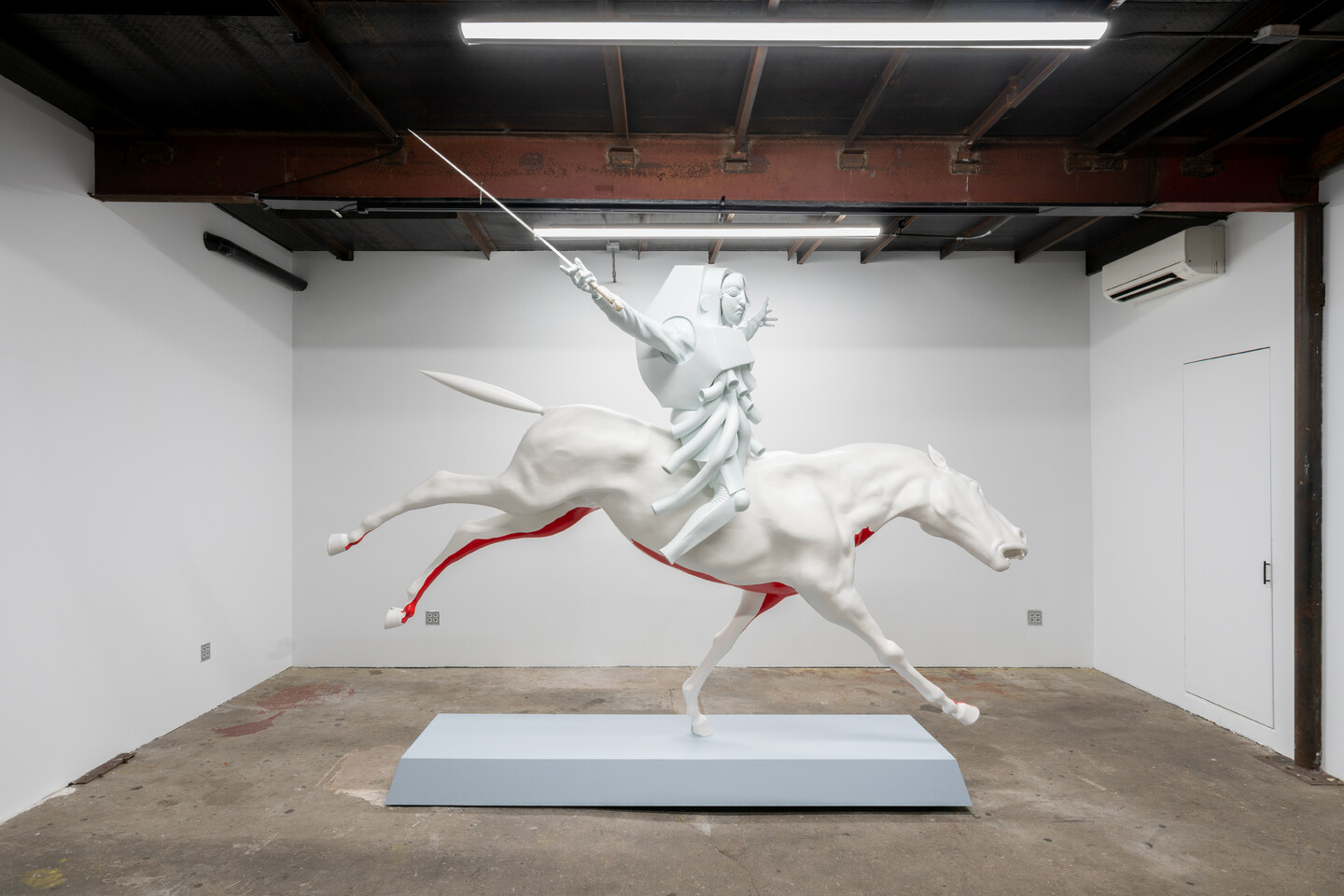
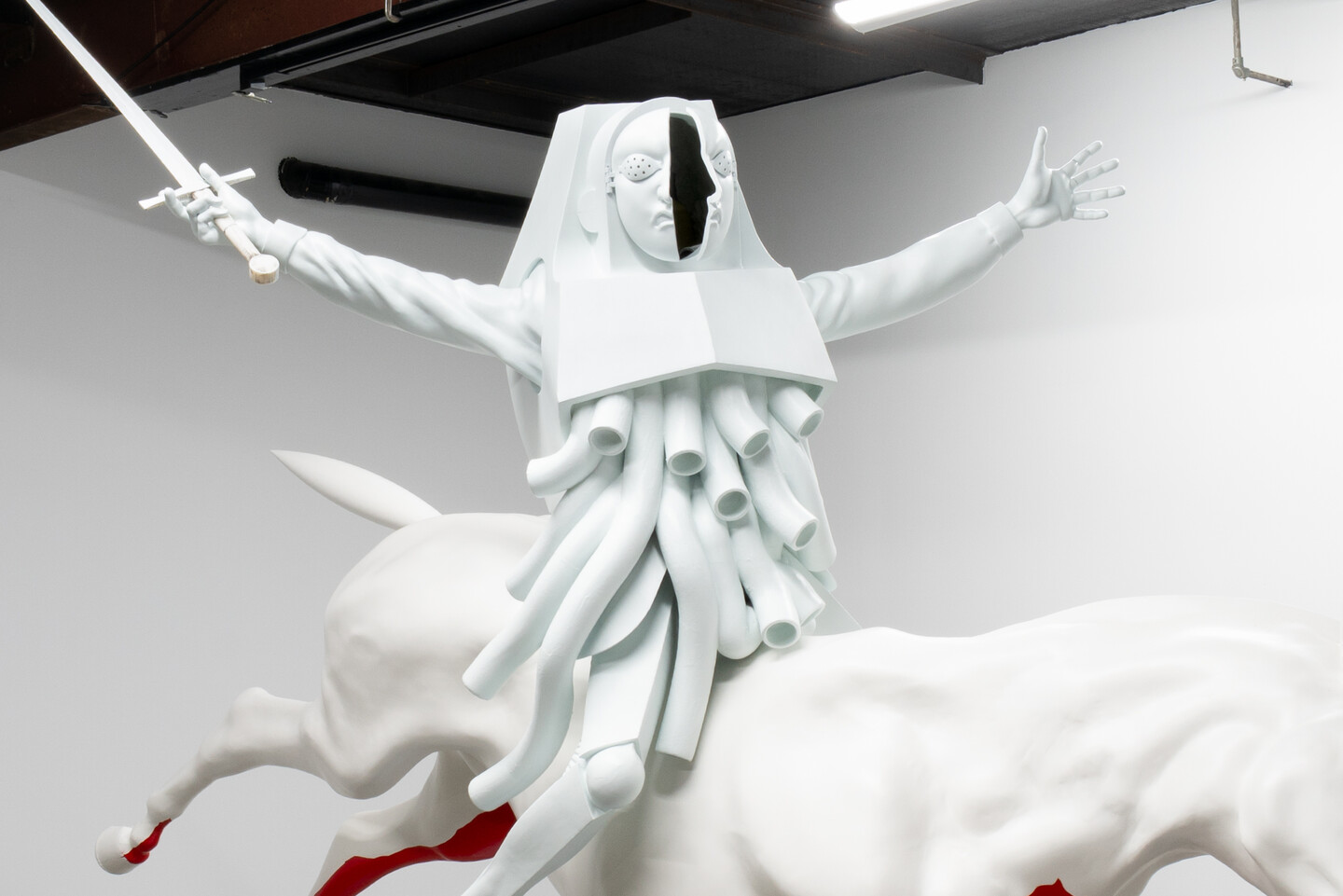
Dragon stands as something like the inversion of George, a monument of both hegemonic power and its horrors. A figure with a hinged faceplate is mounted upon a large white horse, swinging a sword, the underside of the horse bloody. The figure of the White Horse has been significant in Britain since the Bronze Age (carved into the hillside at Uffington in antiquity). On April 24, 2024, several horses belonging to the British Army broke free and ran through the streets of London, including a white horse which bled a dark red across its chest and belly. The white horse as a symbolic creature, wounded, panicking through the streets and thrashing itself to death, appears as a form standing in for the slow dissolution of the English project. Abstracted out of the shape of a human, bulging and spilling, Dragon is a rendering of a monstrous and corrosive inhumanity, of dominating power: the crusading white knight, an aristocratic Roman Cavalryman, a mounted riot cop.
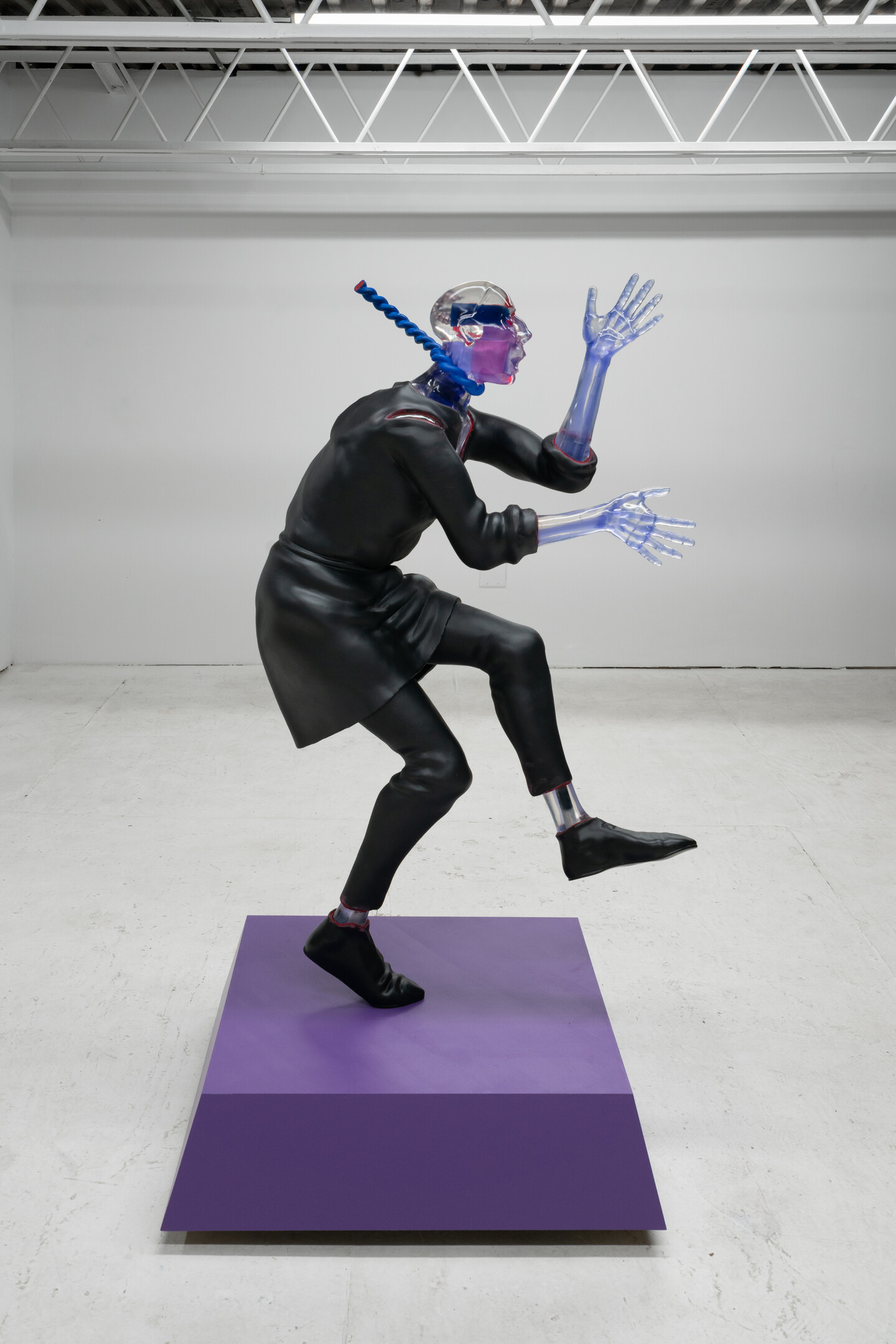
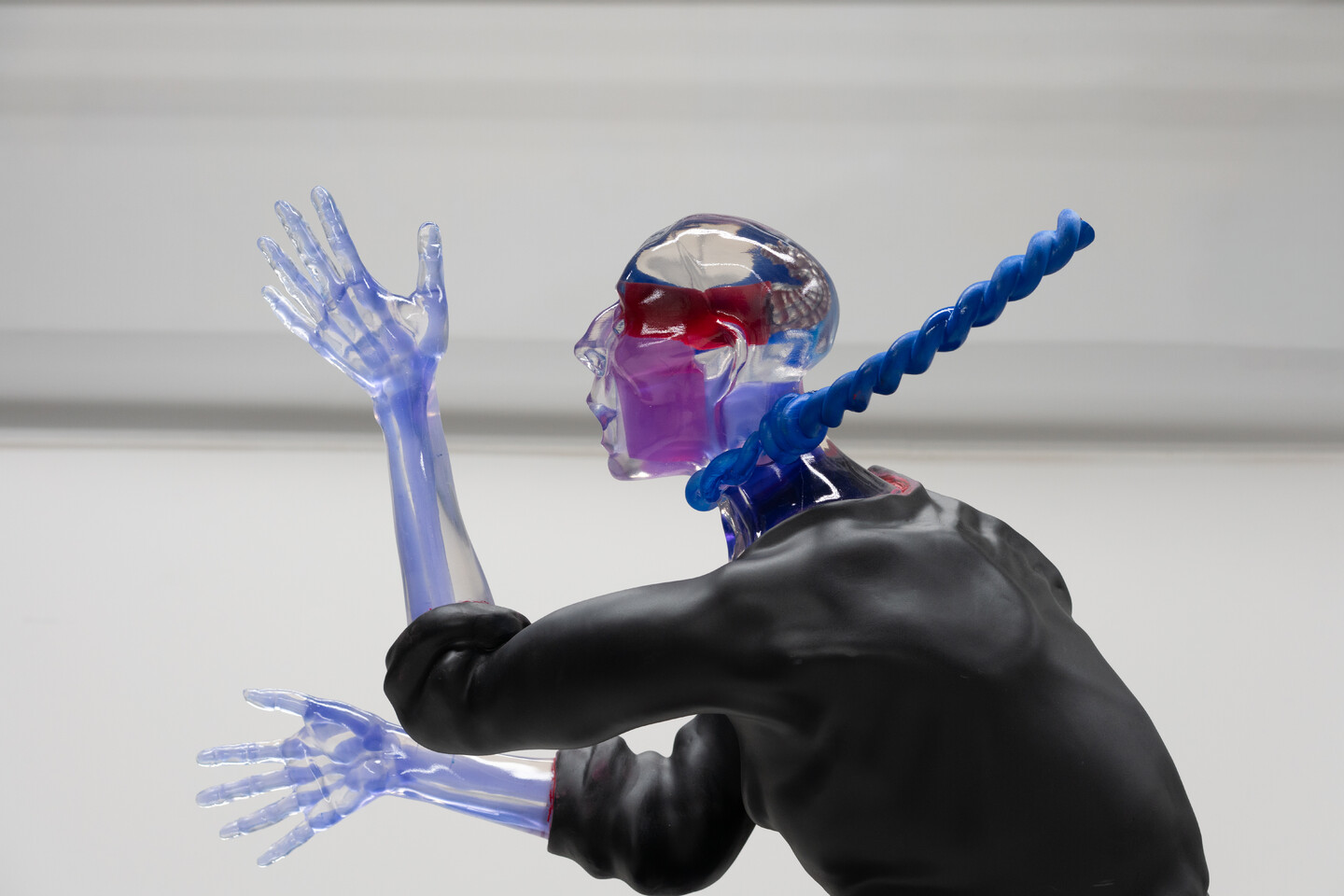
Peasant stands upstairs, wearing the same clothes as the peasant downstairs—a ripped tunic and dark pants. A noose hangs around his neck. The skin of the figure appears translucent, as if upon the threshold of vaporization, tendrils of flesh and organs twisting and changing: “Organs of the body remaking themselves into something that could love its bondage perhaps,” the sculptor writes, “Like a fish evolved to a life at the bottom of the Mariana Trench.” Peasant is a brutalized figure, dead from abuse, merging with the machine out of a bizarre ghost of solidarity.
PROGRAMS
SEP 26, 3-9PM: HUNDRED FOOT: BECOMING-ENGLAND BY JOSHUA HART
OCT 11, 7PM: VIDEO PAINTING PERFORMANCE BY DANTE LENTZ
OCT 17, 7PM: LAUNCH FOR WYRM MAGZINE - THE HUNT, FEATURING JANE SCHOENBRUN, JANE BALFUS, RYAN D. PETERSON, DEAN MOSS, KELLEY DONG, J GORDON FAYLOR
BIO
Joseph Buckley (b. Ellesmere Port, United Kingdom) lives and works in New York City, NY. His work brings a formidable knowledge of science fictional premises, traumas and catastrophes into uncomfortable proximity with contemporary class and race politics. Through a critical sculptural practice, he foregrounds the violence of fabrication as an analogue for the social reproduction of inequality, bigotry and ecological collapse. Selected solo projects include Window of Appearances, at Dartmouth College, NH; Despair Engine at Island Gallery, NYC; Cannibal Galaxies at Specialist Gallery, Seattle, WA; Letter From The Home Office at Lock Up International, London, UK; Traitor Muscle at Art in General, NYC; and Brotherhood Tapestry at The Tetley (Yorkshire Contemporary), Leeds, UK. Selected group exhibitions include “Since when did the streets have mouths?” At Below Grand, New York City, USA; 50 Degrees at KINGS Artist-Run, Melbourne, Australia; The Secret Realm of Thrills and Concealment at BROWNIE Project in Shanghai, China; Phantom Sculpture at Warwick Arts Centre, Coventry, UK; Poor Things at Fruitmarket Gallery, Edinburgh, UK; Friends & Family at Anton Kern Gallery, NYC; and Trouble in Outer Heaven: Portable Ops Plus at Southwark Park Gallery, London, UK. In 2021 he received a Jerome Hill Artist Fellowship. In 2025 Buckley was invited to be Artist-in-Residence at Dartmouth College. He is a 2026 Center for Craft Teaching Artist Cohort Grant Recipient. Buckley teaches in the Sculpture Departments at Brooklyn College, Sarah Lawrence College, and Yale School of Art.