Nov 10–Dec 12, 2026
Jools Rothblatt, Jarret Kobek, Jason Simon, Clayton Patterson
The Lazarus Layers
Organized by Nick Irvin
So raves Père Jean in Le Chiffonnier de Paris, the 1847 play by writer and later communard Félix Pyat. Père Jean is one of the great characters of the French stage. He is the chiffonnier, or ragpicker, an emblematic figure for Paris and other urban centers of the nineteenth century. Industry produced waste, and ragpickers found ways to feed that waste back into the system. Picaresque outsiders, the ragpickers gathered cigarette butts for scrap tobacco, chicken bones for broth, and perhaps most importantly, scraps of cloth that were boiled down and turned into paper. The profusion of print culture in that century is inconceivable without their labor.
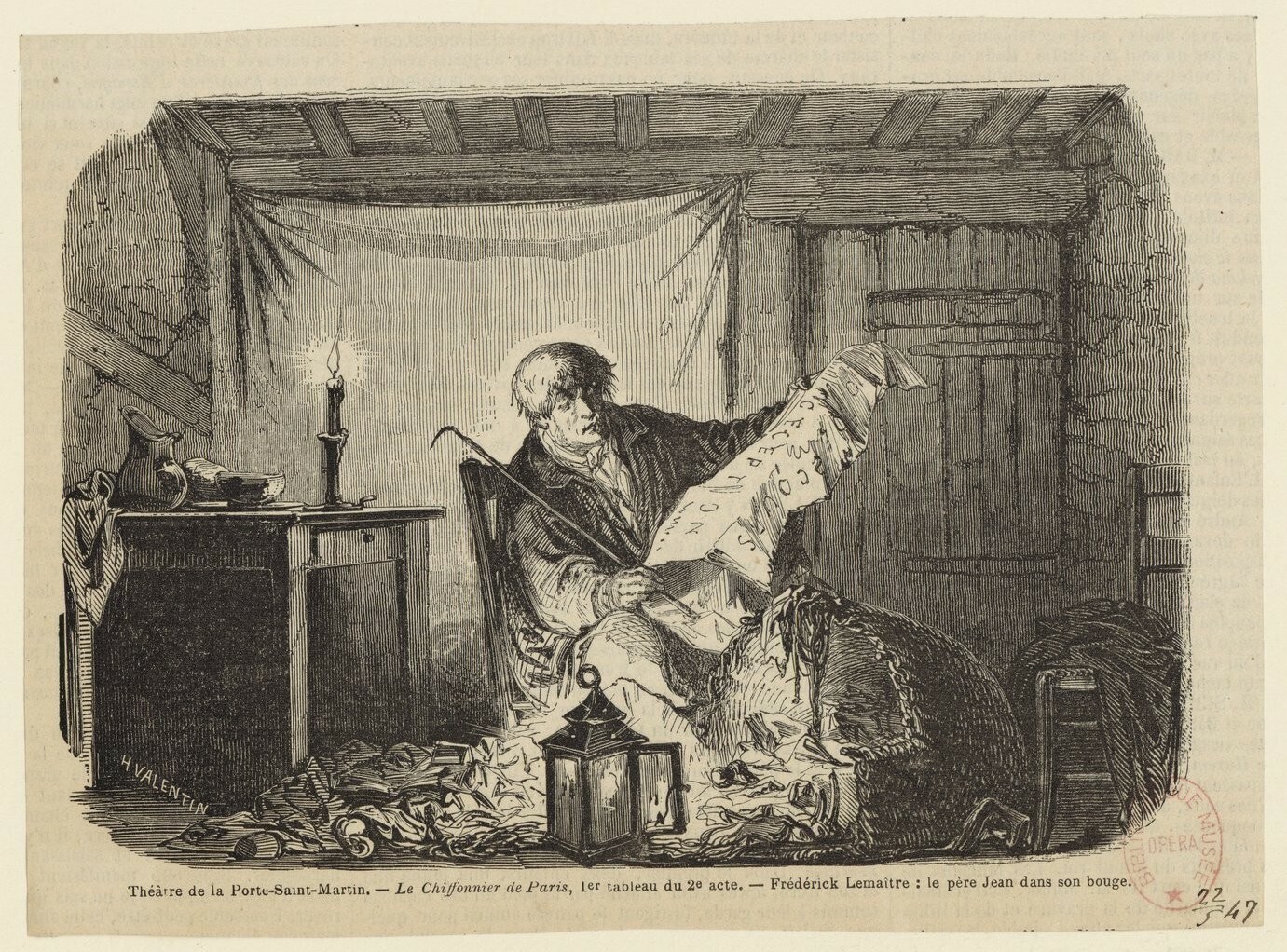
In the emerging ecosystem of the modern city, then, ragpickers were the detritivores—abject but essential workers, constitutive others of civic infrastructure. With Père Jean, Pyat imbued the ragpicker with a dark and ironic wisdom, likening him to Athens’s unassimilable philosopher, Diogenes. Pyat recognized the archetype as the earthy obverse of the moneyed flaneur: not glancing at a remove but sifting from within, and in doing so contending with a far wider swath of society. For his part, Baudelaire saw ragpickers as egalitarian collectors: “He collects and catalogues everything that the great city has cast off…He goes through the archives of debauchery…He makes a selection, an intelligent choice.” Baudelaire’s angle lines up with the ragpicker’s German name: Lumpensammler, or “stuff-collector.” It’s clear that he sees them as an analog to creative practice. And while we should take these reports with a grain of salt, some ragpickers supposedly shared artists’ tendency to see their distance from wage labor as a point of pride: “Some who might engage in different occupations rake through dustbins because they love their freedom. They prefer to live in poverty and to be their own masters.”
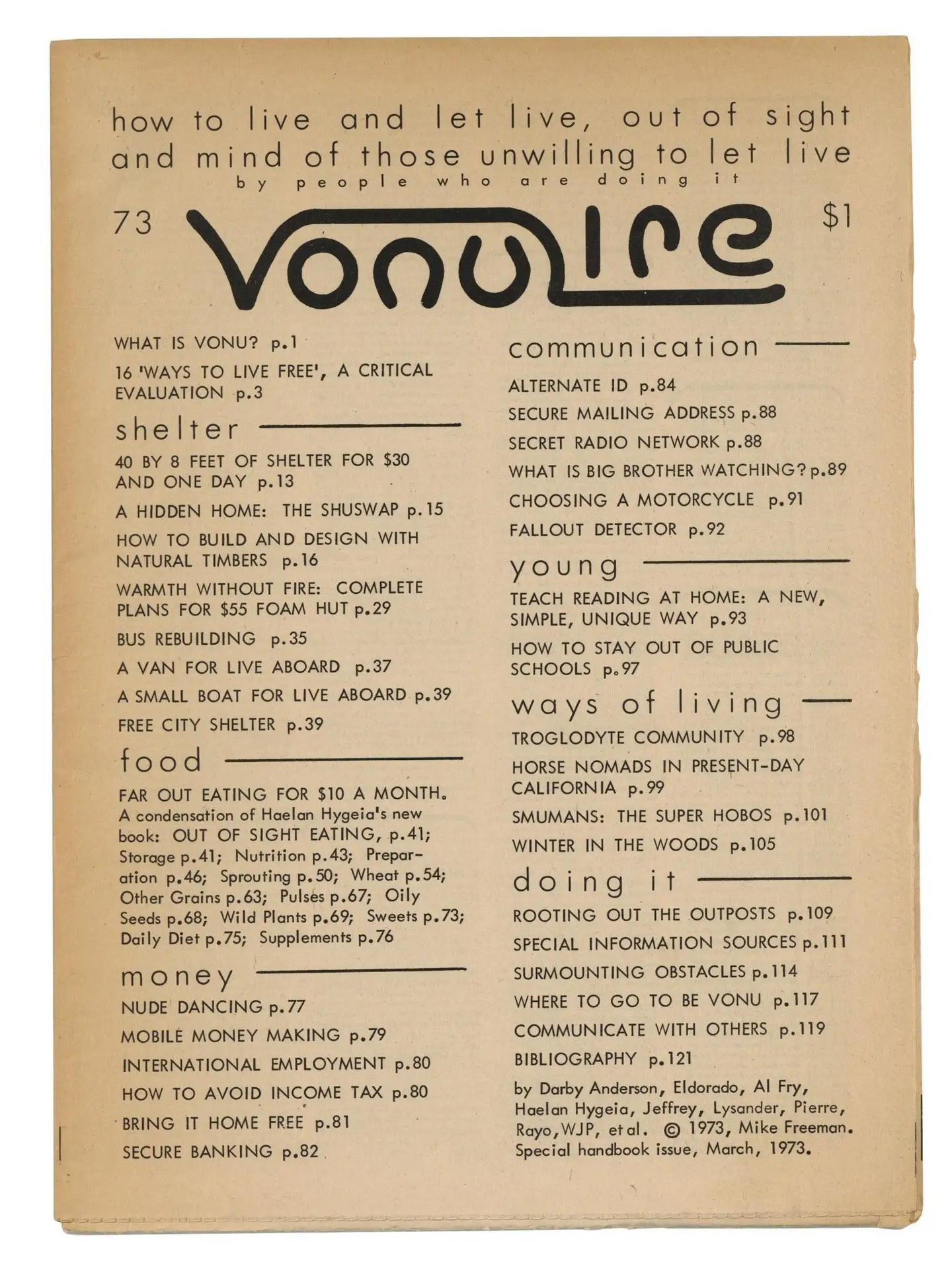
This series of programs at KAJE gathers a few examples of present-day ragpicking impulses, perpetrated by several artists of various stripes. For the most part, their collecting waits in the wings of their “practices” proper: they don’t gather their collections as fodder for assemblage or a stockade of readymades. Rather, their collecting is contemplative, an input stream, and their output manifests in other ways. To spell it out in industry terms, this is a series about ephemera and archives, but of a low sort: intuitive or improvised methods, applied to left-field subjects. It came about as I was trying to make sense of my past curatorial projects, including the Song Cycle series, which I’ve realized have through-lines of marginalia and loss.
Why “The Lazarus Layers”? It’s a turn of phrase from the first volume of Capital—one of Marx’s offhand literary flourishes, which pops up in a culminating section describing the structural necessity of a permanent underclass in capitalist societies. Marx realizes that a standing reserve of surplus labor—precarious and underemployed people, or “the lazarus layers of the working class”—helps keep workers’ wages low in times of crisis.4 (Think of scabbing, or offshoring.) He calls this social stratum the lumpenproletariat. Although Marx is generally suspicious of the disorderly lumpen, his comparison to Lazarus seems affectionate: it is a name that appears twice in the New Testament as a symbol of the downtrodden. In the Gospel of Luke, Jesus describes a beggar named Lazarus who died at the gates of a rich man’s house and went to heaven; soon after the rich man died and went to hell. In the Gospel of John, Lazarus is the dead man whom Jesus resurrects, his last and greatest miracle before the passion. It’s not clear whether they are meant to be the same Lazarus, and it’s not clear whether Marx has one or both stories in mind. In any case, Marx is picking up on the reversal of fortunes—and for him, the arch-lumpenprole was the lumpensammler, the ragpicker.
This loop surfaced as I was thinking about the shifting fortunes of ephemera and vitrines as a curatorial gesture. What does it mean in the boom times, and what does it mean in a crash? On one level, there’s a prestige in brainy bibliophilia and ephemeral practices that largely withstands market cycles. But in lean years, they seem to get more mileage. Consider the explosion of mail art in the seventies, or net art in the Great Recession; the uptick in print exhibitions in Chelsea in the past few seasons, or a new art fair where each gallery’s display is just one tabletop. The idea seems to be that when money isn’t flowing, art might “get back to what really matters”: Lazarus ascends, or resurrects, the money-driven people are cast off, and a hundred project spaces bloom. A silver lining here could be that people with fewer resources might find a way of working, or of gaining appreciation for the ways that they have long been working. Maybe that is how I’ve ended up working how I work. What I’m trying to get my head around now, though, is how such projects in such moments might also be made to function like a standing reserve, filling in the seats, stabilizing value.
— Nick Irvin
NOV 10, 7PM: "The Lazarus Layers," a curatorial talk by Nick Irvin
NOV 21: "Kim Fuck Unpacks a Parcel," a performance by Jools Rothblatt
DEC 2: "Fanzine Methodology," a conversation with Jarrett Kobek
DEC 8: “Festschrift for an Archive,” a retelling by Jason Simon
DEC 12: “Public Access: Manhattan Neighborhood Network Tapes,” a screening by Clayton Patterson